What the regulator confirms
The official FAQ refers to Part 1 of Article 30 of Federal Law No. 282-FZ. It names a broker and an organisation that exchanges digital currencies as participants through which transactions may be made. Their activity is tied to a licence or entry in a Bank of Russia register.
That guidance does not mean that every website offering an exchange is an authorised intermediary. A particular firm's status should be checked against the Bank of Russia registers, rather than a brand name, advertisement, or domain.
P2P activity and non-custodial wallets
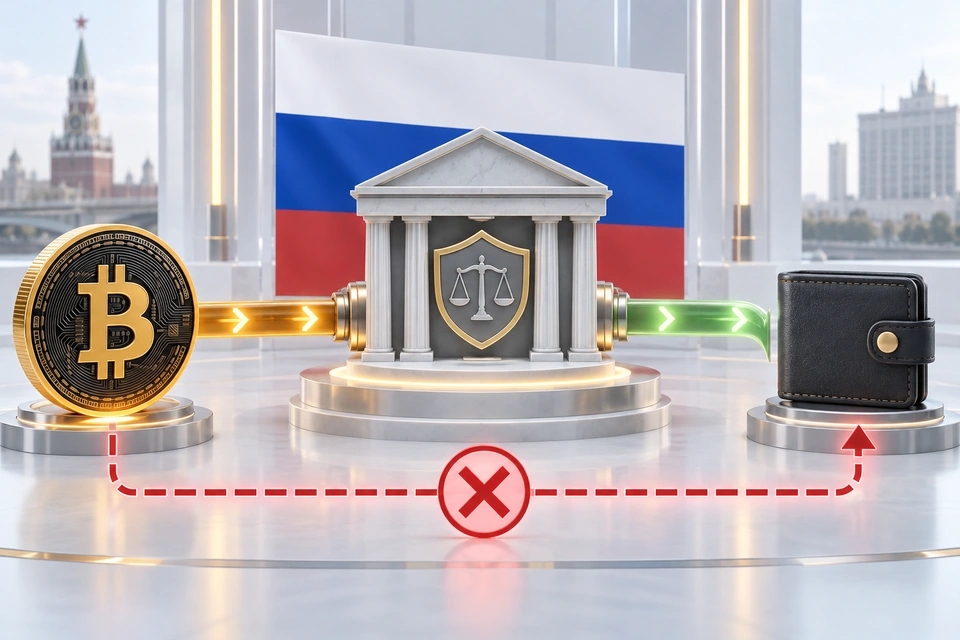
The Bank of Russia says that transactions between individuals without an organiser of circulation are allowed only until 1 July 2027. After that date, the list of permitted transactions described by the regulator does not include direct P2P transactions between individuals.
The same guidance says that a transfer from a digital account to the same person's non-custodial wallet is not allowed, and that transfers between individuals through identifiers administered by a digital depository are also not allowed. This describes the Russian legal regime and its dates, not a technical claim that a blockchain transfer is impossible.
What users can do
Users should separate an operation's legal status from the technical ability to broadcast a transaction. Before a transaction, it is sensible to check whether the participant appears in the current register, which rules apply to the client's category, and how the operation is recorded. Statements, trade histories, and service details can help document the transaction.
This is not advice to circumvent the requirements or use unknown services. Rules can be clarified by later regulations and transition provisions, so material transactions call for current primary sources and, where appropriate, individual legal or tax advice.