What South Korea decided
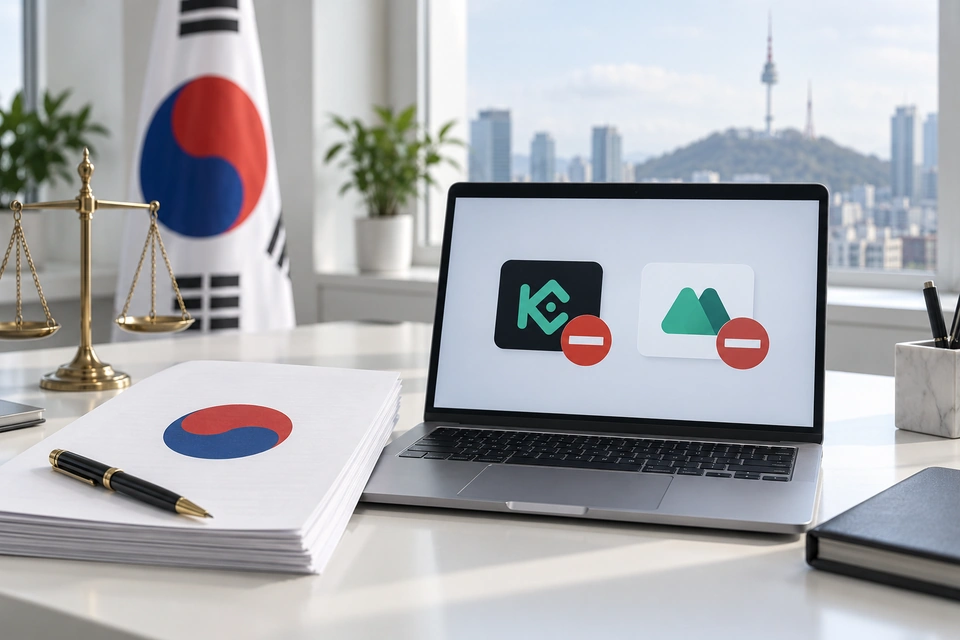
The Financial Services Commission said the Korea Communications Standards Commission considered the FIU request on 6 and 7 October and made decisions covering 27 websites. For foreign operators, the stated measure is blocking access from South Korea, while domestic operators can face termination of service. The decision extends earlier app-store restrictions to websites.
The official notice describes the services as unregistered operators under Korea's Act on Reporting and Using Specified Financial Transaction Information. A website block does not establish that every platform committed fraud, nor does it announce confiscation of customer assets. The regulator presents it as enforcement against unregistered activity in the local market and as a user-protection measure.
Why an overseas platform can fall within the rules
Korean requirements are not limited to companies incorporated locally. The FSC lists a Korean-language website, marketing aimed at Korean customers, and support for payments in won as factors in deciding whether a foreign service is operating in the Korean market. The assessment is based on the overall facts, so a brand's country of incorporation alone does not settle the question.
To operate lawfully in the country, a virtual-asset service provider must register with the FIU and meet requirements that include ISMS certification. The FSC says unregistered business activity can expose the operator to criminal penalties. That describes the regulatory framework for a service; it is not a recommendation to buy, sell, or transfer digital assets.
What it may mean for existing customers
A restriction on a domain can make account access, notices, and withdrawals harder even when assets do not automatically disappear. The regulator acknowledged possible disruption for existing customers and said that, with operator cooperation, it planned to provide withdrawal guidance through the DAXA industry association. The actual process will depend on the platform and should not be assumed in advance.
Anyone with a balance on a service should verify the operator's official status and support channels, retain transaction records, and read notices in the official app or account. Do not use lookalike websites, addresses from promotional messages, or give a seed phrase, recovery code, or identity documents to anyone claiming that an urgent withdrawal is required.
The practical takeaway
The announcement confirms a change in South Korean enforcement: website access now joins mobile-app restrictions. It does not show that every international crypto platform is unavailable in the country, and it does not replace a current status check for a specific provider.
People using crypto services from South Korea can check registration information through official FIU resources, review open orders, and keep current support contacts. If access changes suddenly, confirming the official domain and withdrawal conditions is usually safer than trying to circumvent a block through an unfamiliar application.