What the report compares
CoinShares compares two ways to use power capacity and data centers. Electricity prices, capital expenditure, utilization, contract terms, equipment costs and useful lives all affect the calculation. A difference in estimated profit per MW therefore does not mean that every miner can achieve the same result simply by changing equipment.
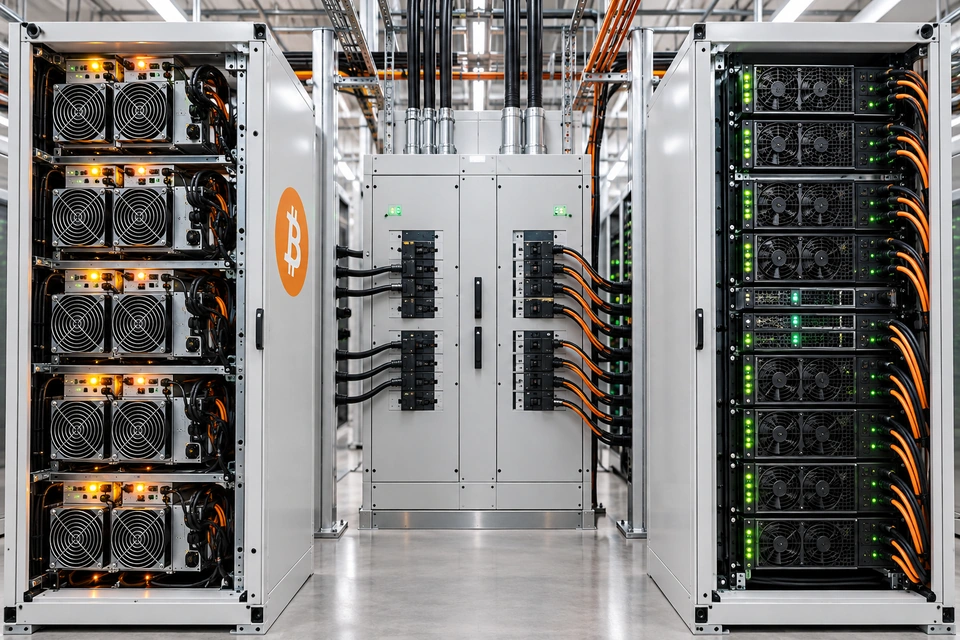
AI/HPC requires servers, networking, cooling and contracts that can differ materially from ASIC-mining infrastructure. Bitcoin mining is not uniform either: its economics depend on hashrate, difficulty, fees, BTC's price, electricity costs and site availability.
Contracted capacity is not live capacity
The report refers to more than 4 GW of contracted capacity but about 550 MW of billable capacity. That distinction matters. A contract, a construction plan and commissioned capacity are different project stages with different execution risks.
Order and expected-revenue figures can indicate interest in AI/HPC, but they are not the same as cash already earned. When assessing a company, it helps to consider delivery timing, customer terms, capital needs and whether a site can reliably secure power.
What it means for Bitcoin mining
Diversifying some sites into AI/HPC does not mean Bitcoin mining disappears. Operators may reallocate capacity, seek long-term contracts or maintain a mixed model. The choice depends on local economics, technical compatibility and access to financing.
For the Bitcoin network, the aggregate incentive for miners remains central. If some infrastructure changes use, hashrate and difficulty can adapt over time, but one estimate of return per MW cannot establish the future effect.
How to read the comparison
CoinShares' estimates are useful as an industry snapshot, not as an investment signal. It is important to distinguish estimated profit, contracted capacity, operating capacity and realized revenue, and to check primary disclosures from the companies involved.
For a Bitcoin-service user, the story does not change basic operational checks: verify the current rate, network, amount received and destination address before an exchange. Infrastructure trends do not remove volatility or the need to verify the terms independently.