What Strive disclosed in its 8-K
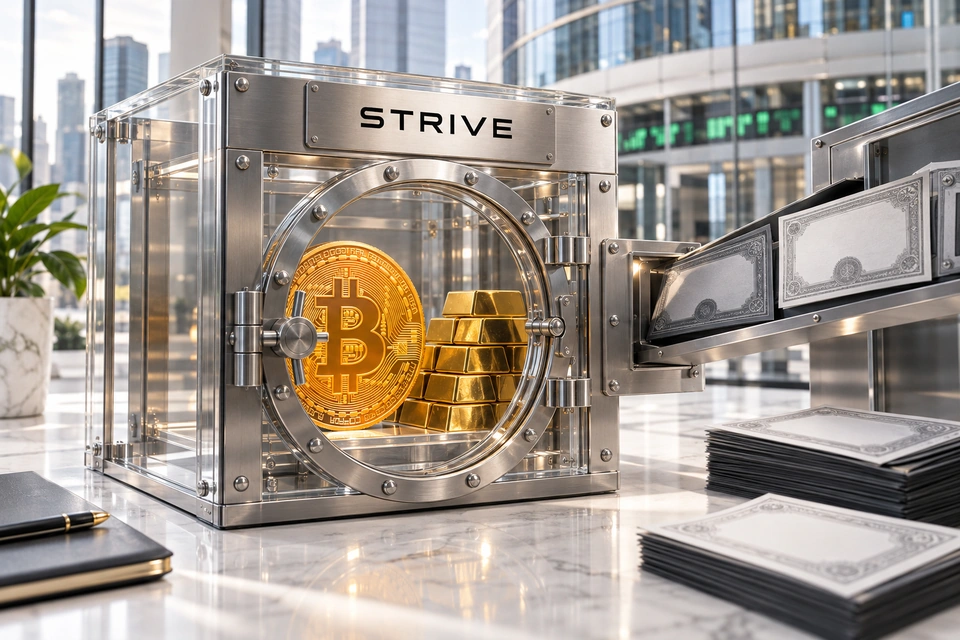
In the current report filed with the SEC on September 14, Strive reported buying 469 BTC from September 8 through September 11, 2026. Its stated average purchase price was approximately $77,954 per bitcoin, inclusive of fees and expenses. The filing's table shows reported Bitcoin holdings rising from 24,531 to 25,000 BTC.
This is the issuer's primary disclosure, making it more reliable than market-news summaries for the dates, quantity and stated average price. The filing is still a point-in-time disclosure. It does not promise further purchases or establish the treasury's market value when this article is read.
How the purchase was financed
The same filing shows SATA preferred shares outstanding rising from 9,995,425 to 10,397,966, an increase of 402,541 shares. Strive said the Bitcoin purchase was fully funded through proceeds from SATA sales. That distinction matters: the company describes the transaction as financing through its own preferred instrument, not solely as a draw on existing cash.
Preferred shares can have rights and payment structures that differ from common stock, with the exact terms set out in the issuer's documents. For shareholders and instrument holders, the relevant questions go beyond BTC purchased: cost of capital, future payments, potential dilution and the company's ability to meet obligations all matter.
The balance-sheet snapshot
Alongside Bitcoin, Strive reported $204.2 million in cash and cash equivalents as of September 11. It also disclosed 505,000 Strategy STRC preferred shares with a stated fair value of about $49.8 million. Those entries show that a corporate balance sheet is not made up of one asset, even where Bitcoin is central to the public strategy.
The figures are tied to the disclosed date and the company's methodology. Cash balances, securities valuations and Bitcoin's market price change over time. They should not be added up as a permanent valuation of the business or treated as a guarantee of liquidity in every market condition.
What a corporate reserve does not measure
The reported 25,000 BTC is a quantity stated by the issuer, not a recommendation to invest in Bitcoin or Strive securities. The company's share price can be affected by its capital structure, operating costs, access to financing, interest rates, tax and regulatory factors, as well as Bitcoin's price.
The average purchase price is not a price target either. It describes a historical transaction over a limited period, and the future market price can be above or below it. A corporate treasury model has risks that differ from holding an asset independently: management decisions and funding terms affect outcomes alongside BTC's price.
What to follow next
To follow the strategy, read later SEC filings and compare changes in Bitcoin holdings with changes in common and preferred shares, cash balances and capital terms. The funding instrument can be as important as the next purchase amount.
For a Bitcoin-service user, this is an illustration of institutional demand rather than a reason to change a personal plan. Before exchanging, verify the current rate, the amount to receive, the selected network and the destination address. Corporate treasury reports do not remove volatility or replace basic operational safety.