What the blockchain confirms
The coins originated in twelve blocks at heights 43,361, 43,452, 43,546, 43,647, 43,655, 43,680, 43,693, 43,765, 43,855, 43,871, 43,923 and 43,928. Their timestamps run from March 2 through March 5, 2010. Each coinbase transaction created a single 50 BTC output, the standard block reward before Bitcoin's first halving.
All twelve outputs were spent on September 5, 2026. The first transaction entered block 965,639 at 17:27:32 UTC, the second reached block 965,645 at 17:44:35 UTC, and the other ten appeared consecutively in block 965,646 at 17:57:16 UTC. The sequence is consistent with a test transfer before the main batch, although timing alone cannot establish the operator's purpose.
Every transaction contained one 50 BTC input and one new output worth 49.99998 BTC. The fee was exactly 2,000 satoshis per transfer, or 24,000 satoshis across the series. Matching amounts, fees, formats and timing strongly indicate a coordinated operation, but they do not by themselves prove that one person controls every key.
Why this is not Satoshi returning
The label “Satoshi-era coins” refers to an early network period when Satoshi Nakamoto was still involved in Bitcoin's development. Headlines often turn that time reference into a claim about a particular owner, even though the blockchain records public keys, scripts, amounts and signatures rather than the miner's identity.
Whale Alert separately listed the first seven identified blocks and said its research found that none had been mined by Satoshi. The analysis was later expanded to twelve rewards with the same conclusion. This is an attributed assessment from an analytics platform, not cryptographic proof of identity, but it directly contradicts claims that the transfers confirm Bitcoin's creator has returned.
Proving control of a recognized set of Satoshi's coins would require a verifiable signature from the relevant keys or other unusually strong evidence. Spending a March 2010 mining reward does not provide that. The narrower conclusion is both accurate and useful: an early miner retained access to twelve keys for roughly 16.5 years.
The move from P2PK to P2WPKH
The old rewards used Pay-to-Public-Key, or P2PK. This script places the recipient's full public key directly in the output. It is a recognizable artifact of early Bitcoin versions, before modern address formats and wallet practices became standard.
The new outputs use P2WPKH, or Pay-to-Witness-Public-Key-Hash, with bech32 addresses beginning with bc1q. Under BIP 141, this output contains a witness-program version and a 20-byte public-key hash. The full public key is supplied later if the owner spends the new output.
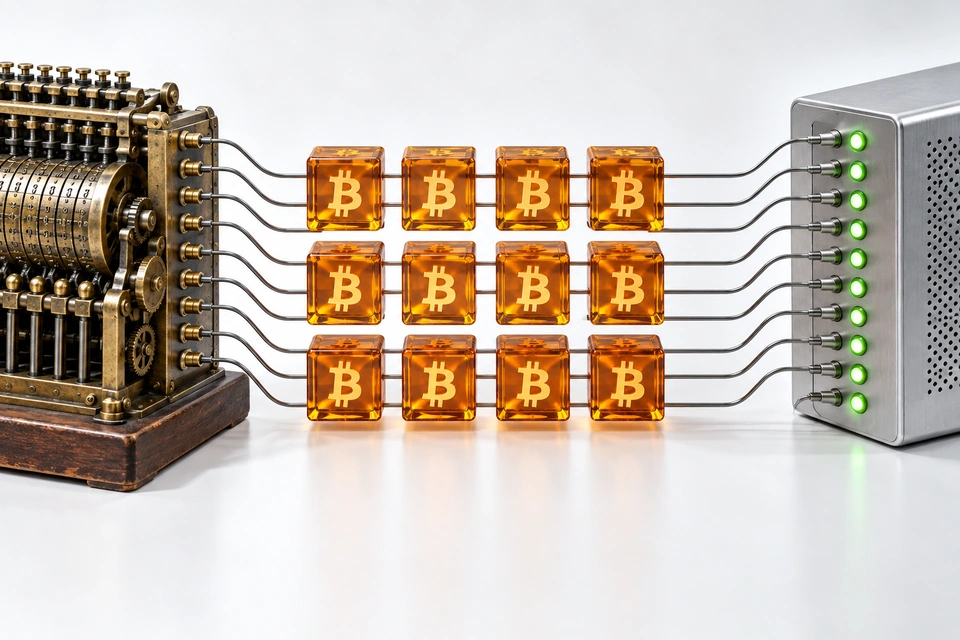
Technically, the series looks like a migration from an obsolete script type into a modern self-custody format. That is compatible with an infrastructure or key-management upgrade, but it does not establish the motive. A sale, inheritance event, recovered wallet or preparation for a quantum threat all remain hypotheses without additional evidence.
The principal outputs have not moved again
At the September 10 check, the twelve principal outputs of 49.99998 BTC remained unspent at their destination addresses. Two addresses had also received tiny dust payments from unrelated transactions. Those deposits do not change the status of the principal outputs and do not prove that their owner interacted with the dust senders.
The transfers did not consolidate 600 BTC into one wallet: each reward went to a separate new address. Their transaction structure also contains no direct evidence of an exchange deposit. An analytics label can add context, but the absence of a label cannot guarantee that an address belongs to a private cold wallet.
Movement therefore should not be treated automatically as a sale. A stronger signal would be another spend from the new outputs, consolidation, amount splitting or a transfer to a verified trading-platform address. Until then, the blockchain shows a change in custody location, not the final economic purpose.
Why 600 BTC is not a market signal by itself
Old coins attract attention because of their age and enormous unrealized gain, but UTXO age does not define the owner's intention. Someone can upgrade a wallet, separate risks, arrange inheritance or change a custody scheme without selling a single satoshi.
Six hundred BTC is a meaningful amount, yet its market effect depends on liquidity, execution and the next destination. An exchange sale, an over-the-counter trade and a transfer between self-controlled addresses create very different pressure. The current transactions do not let observers select one of those scenarios.
The practical response is to watch later spends instead of trading on the word “Satoshi.” Even precise on-chain data describes coin movement, not its cause, legal owner or a future transaction. The louder the conclusion, the more evidence it should require.
What matters when exchanging Bitcoin
Stories like this can briefly increase volatility when a neutral custody move is framed as Satoshi's return or an imminent selloff. For someone exchanging Bitcoin, checking the quote-validity window and rate-lock rule is more useful than guessing the motives of an unknown early miner.
The bc1q destinations in this series also reinforce the basic need to verify both the address and network. P2WPKH is a normal Bitcoin mainnet format, but a valid prefix does not replace character-by-character checking, a small test where appropriate and waiting for the required confirmations.
The conclusion remains deliberately narrow: twelve rewards mined in March 2010 did move in September 2026, their keys were not lost, and the new principal outputs remain unspent. Everything else, from the owner's identity to an intention to sell, requires another on-chain event or a verifiable statement.