What Binance introduced
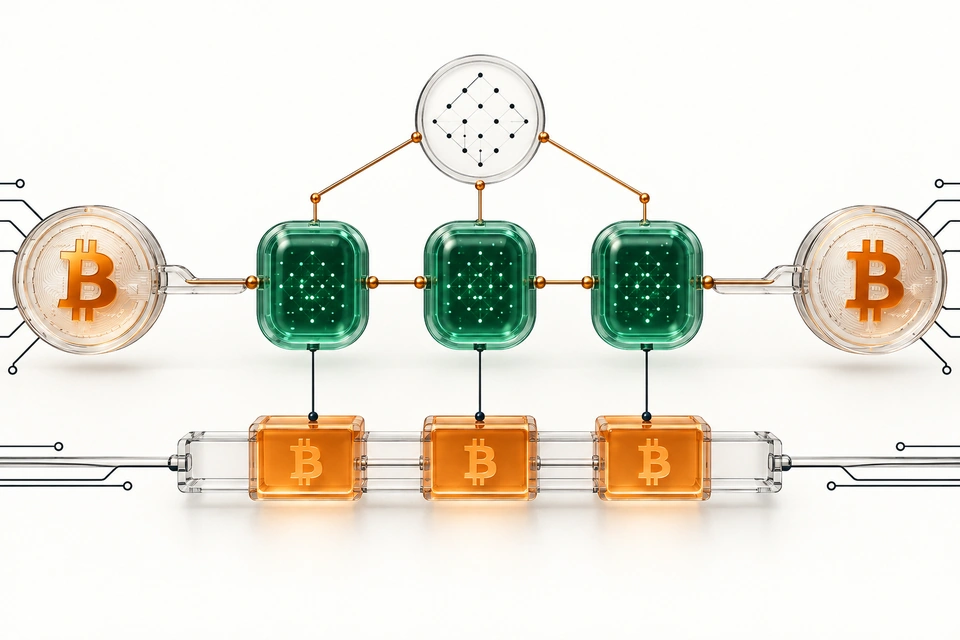
Agent OS brings several Binance tools into one developer layer: trading APIs, Wallet Agentic Hub, programmable x402 payments, Skill Hub and newly added Model Context Protocol support. Binance and TechCrunch reported more than 300 million registered users at launch, so agent access on this infrastructure is more than a small technical experiment.
The platform targets applications that can act rather than only answer questions. A compatible agent can read prices, order books and candles, inspect its assigned sub-account balance, place or cancel orders, and move assets between wallets inside that sub-account.
Product availability still depends on jurisdiction, account eligibility and the scopes granted by the user. The launch does not mean that every Binance customer automatically receives identical functions or that an agent starts trading without a separate authorization flow.
MCP turns an assistant into a market participant
Model Context Protocol provides a standard way for an AI client to connect to external tools. Instead of building a separate integration for every Binance interface, a user authorizes a compatible client and grants a limited set of capabilities through the official MCP server.
Binance documentation lists ChatGPT, Codex, Claude Code, Visual Studio Code and other MCP-compatible applications among the supported clients. Public market data can be read without access to funds, while balances and trading require authentication and the relevant scopes.
- Market reads: tickers, order books, candles and funding rates.
- Account checks: balances, positions and records in the assigned sub-account.
- Trading: Spot, Margin, Convert and supported futures products.
- Internal transfers: only between wallets in the same Agentic sub-account.
A sub-account limits access, not market risk
The agent operates inside a dedicated Agentic sub-account isolated from the main trading balance. The user funds it manually through the Binance interface. An agent cannot pull assets from the main account, so the amount transferred in advance becomes the primary financial boundary.
Current Binance documentation states the withdrawal restriction more strongly than early launch coverage: an external withdrawal scope is never available. The agent can move funds between Spot, Margin and Futures wallets inside its assigned sub-account, but cannot send them outside it. Email and KYC records are also outside the permitted trading information described at launch.
This isolation reduces the risk of direct asset withdrawal, but it does not prevent a bad trade. A leveraged position, incorrect size, wrong symbol or response to stale data can reduce the balance without violating any technical permission.
Order confirmation differs between launch coverage and the guide
TechCrunch reported on 20 August that a Binance representative described a choice between approving every order and allowing autonomous execution after permissions were configured. The official MCP Server guide, updated on 21 August, documents a more conservative flow: every action that places or cancels an order or moves funds must first be confirmed by the user.
Market reads require no confirmation. Before a trade, the agent is expected to restate the symbol, side, order type and amount, then wait for approval. The guide applies this confirmation pattern to every operation that changes the sub-account state.
The autonomous mode described in early coverage should therefore not be treated as universally available. Users should rely on the current documentation for their specific product and verify it again before connecting an agent.
Where the 50,000 and 100,000 dollar limits apply
The daily limits reported at launch apply to Agentic Wallet operations and payment use cases, not to a separate loss cap on the exchange sub-account. According to figures Binance provided to TechCrunch, regular swaps are capped at 50,000 dollars per day and DeFi transactions have a default daily limit of 100,000 dollars.
x402 payments carry a much smaller limit of 20 dollars per day. These figures describe different channels and should not be combined into one trading allowance.
Binance did not announce a separate maximum-loss limit for exchange trading by an agent. The practical ceiling is the balance transferred to the sub-account, together with the rules of the relevant market, product and account permissions.
- Regular Agentic Wallet swaps: up to 50,000 dollars per day.
- DeFi activity: a default limit of up to 100,000 dollars per day.
- x402 payments: up to 20 dollars per day.
- Exchange trading: no separate agent loss cap was announced.
Why Binance cannot see the reasoning
Binance can observe the resulting order and apply its existing security, risk-control and AML systems. The analysis, interpretation and model reasoning occur in the external application or on the user's machine, however, so the exchange does not know why the agent selected a particular trade.
That creates a gap between controlling an action and controlling its cause. An agent may be properly authorized but rely on an outdated price, misunderstand a request or consume a manipulated instruction from an external source. The resulting order can be technically valid and economically wrong at the same time.
Binance documentation explicitly warns that AI can make mistakes, use outdated or hallucinated information and send incorrect parameters. Responsibility for supervising the agent and verifying its actions remains with the user.
Controls available to the user
Access follows a least-privilege model. A user can grant public market data first, enable account viewing separately, and add trading or internal transfer scopes only when required. To change permissions, the documentation directs users to disconnect the agent and authorize it again.
The sub-account panel also provides agent disconnection and an emergency stop. Emergency stop disconnects all attached agents and cancels open orders and positions in the Agentic sub-account in one step. The user can then transfer the remaining assets back manually.
- Start with market data and no trading permission.
- Fund the sub-account with a deliberately limited amount.
- Verify the symbol, side, type, size and market for every order.
- Use emergency stop when activity differs from expectations.
Agentic trading still carries real trading risk
Agent OS standardizes the connection between AI and financial infrastructure and makes that connection substantially easier to use. An isolated sub-account, unavailable withdrawals and revocable permissions establish useful technical boundaries, but they do not turn model output into an error-free strategy.
The larger change is not simply another trading bot. General-purpose AI clients now have an official route to perform financial actions. As connection becomes easier, manual verification, strict capital limits and the recognition that a correctly executed instruction can still produce a real loss become more important.