
The proposed limits
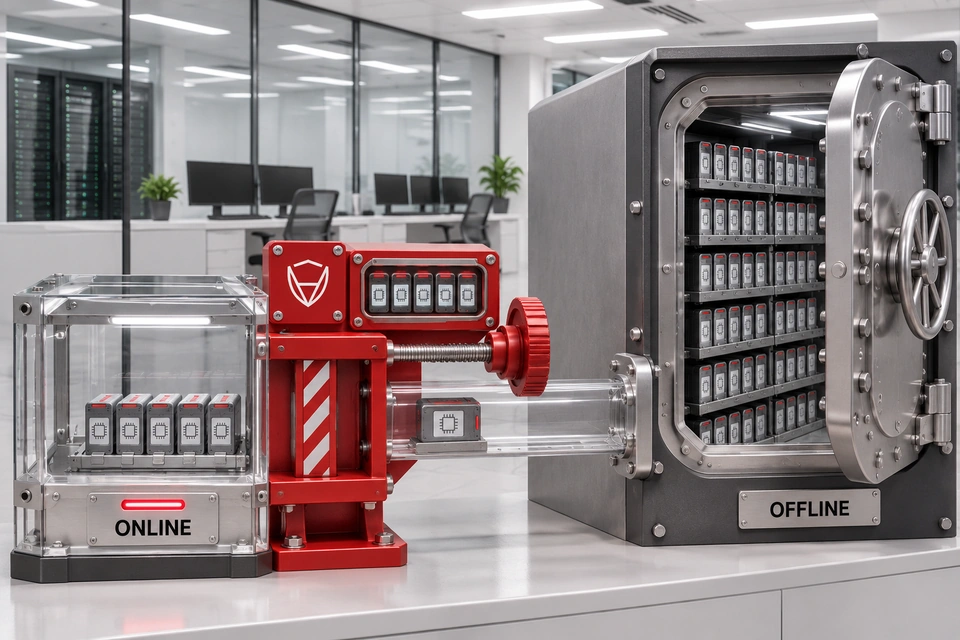
CertiK suggested evaluating a hot-wallet ceiling for each asset and chain against three constraints: a share of customer liabilities, expected withdrawal demand, and an absolute loss amount the exchange could finance and recover from. The tightest applicable constraint would guide the cap while preserving enough liquidity for legitimate withdrawals.
The firm also called for circuit breakers when a threshold is reached. Its interview did not prescribe one universal dollar figure or publish a complete implementation standard. The appropriate level would depend on the platform's size, asset mix and withdrawal patterns. No industry-wide rollout was announced.
Why a cold-storage percentage is not enough
The offline share indicates how much of a platform's holdings is not continuously available through internet-connected wallets. The same percentage can still leave very different dollar amounts online at a small exchange and a large one. A separate monetary ceiling addresses the amount reachable through a particular hot-wallet operation before controls intervene.
Eliminating online balances altogether would obstruct routine withdrawals. CertiK also warned that rigid storage ratios can slow service, prompt hurried transfers from cold custody and shift risk toward key management. Loss limits therefore need to be assessed alongside operational liquidity.
The Binance incident in context
The proposal follows the October 29 attack on Binance's hot-wallet infrastructure. In its November 3 preliminary report, Binance valued affected assets at about $6.34 billion and said it would absorb users' financial losses. It reported replenishing roughly 98% of the affected tokens. That is the exchange's reserve-restoration claim, not proof that the stolen assets themselves were fully recovered.
CertiK did not say its proposed cap had been in place at Binance or that it alone would have stopped this attack. Binance's preliminary account also discusses access controls and its signing infrastructure. A balance ceiling can limit assets exposed through one route, but it cannot replace key protection, transaction review or incident response.
What users can infer
A cold-storage ratio or Proof of Reserves does not automatically disclose the balance ceiling of each hot wallet, the quality of signing procedures or how quickly suspicious transfers can be halted. Verifiable reserve data and claims about internal risk controls answer different questions. CertiK's comment is not a security rating for any particular exchange.
For now, the framework remains a recommendation. Its practical value will depend on whether platforms disclose measurable limits, explain how those limits change and subject the controls to independent review. Until then, the proposed thresholds should not be described as protection already operating for customer assets.
- A cap would be set by asset and chain, not inferred from the overall cold-storage share.
- A dollar ceiling and circuit breaker can reduce exposed value without eliminating breach risk.
- CertiK proposed the approach; adoption across exchanges has not been confirmed.